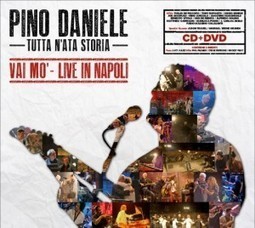
Drie bekende namen uit de Italiaanse muziek hebben de afgelopen dagen nieuwe muziek uitgebracht. Een overzicht.
See on italieplein.nl
via Tumblr http://italianentertainment.tumblr.com/post/41439598815
Drie bekende namen uit de Italiaanse muziek hebben de afgelopen dagen nieuwe muziek uitgebracht. Een overzicht.
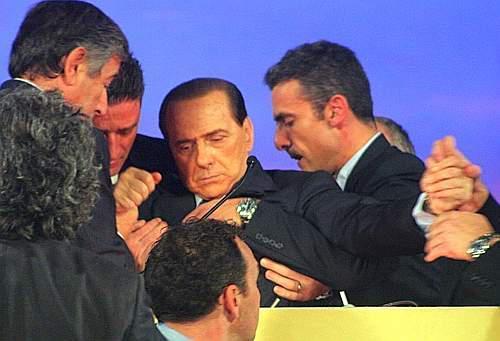
ROMA - Lieve malore per l’ex presidente del consiglio Silvio Berlusconi al Teatro Capranica, dove ha partecipato alla presentazione dei candidati del Pdl per le elezioni 2013. Il Cavaliere ha chiesto di sedersi un momento, dopo aver lasciato il palco, chiedendo un bicchiere d’acqua che gli ha portato Angelino Alfano. «No tutto bene», ha detto lo stesso Berlusconi ai cronisti che gli chiedevano come stesse prima di lasciare il Teatro.
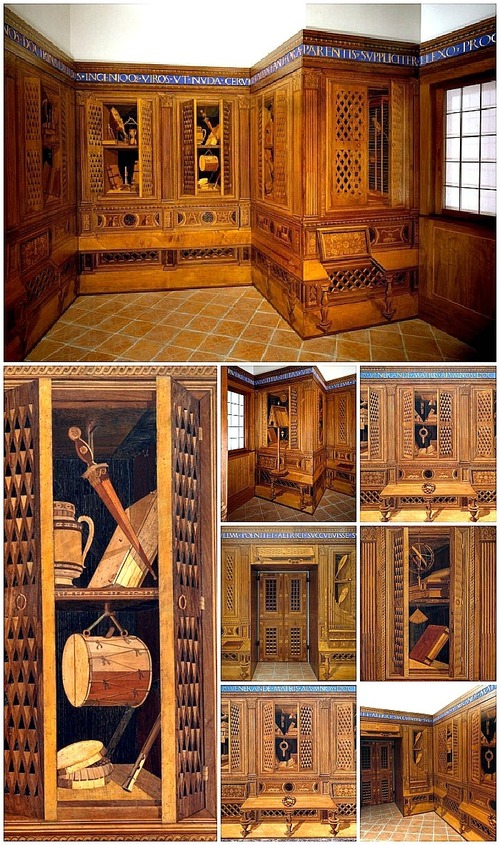
Within the vast halls and imposing galleries of New York’s Metropolitan Museum, well-hidden from the casual visitor, resides the finest Italian Renaissance room in America. The studiolo from Gubbio (e.c. Umbria), in Le Marche region of Italy and the former southern capital of the Montefeltro lands, is a marvel of the Renaissance woodworker’s skill.
This studiolo, which tricks the eye with its seeming three-dimensionality of fictive cabinets, objects you could grab, and projecting benches, proved to be the final architectural triumph created for Federico da Montefeltro (1422–1482)
Richly decorated in intarsia work, it was a small bookroom and place of private contemplation, the setting for intimate discussions between the ruler and a privileged visitor. The construction of Federico’s first studiolo, still in situ in the Urbino palace, began in 1476. From this time, the architect Francesco di Giorgio Martini was in charge of all of Federico’s construction projects.
In dramatically expanding his father’s modest Gubbio residence, Federico had extended it toward the local cathedral while leaving a cathedral plaza between the buildings. This constrained the eastern wall in an eccentric angle, and the studiolo, installed within the odd angle of this wall, thereby acquired its disproportionate, rhomboid shape.
Like its kin, the Gubbio studiolo is a marvel of inlaid woodwork, a triumph of the intarsiatore, the artisan in inlay. Many types of wood are required—spindle-wood, bog oak, cherry, walnut, pear and mulberry—including wood stained by fungus, producing a polychrome palette; these permit the full development of patterns and colors that inform the illusionistic results of three-dimensional depth, shadows and perspective. Two elaborately coffered ceilings, in gold and polychrome, crown the main section and the window alcove. The blank walls above the intarsia wainscoting once held allegories of the liberal arts and portraits of the Famous Men whom Federico emulated.
Created in the Florentine workshop of the brothers Giuliano and Benedetto da Maiano, the studiolo was installed in Gubbio from 1480 until 1483. The final panels, installed after Federico’s death, reference Guidobaldo, but virtually all the panels reflect Federico’s life, interests and achievements. The intarsia panels “read” clockwise from the left of the doorway. The prime viewing site is in the center, facing the long wall, with one’s back to the window alcove; the Order of the Garter dominates the view. The viewer’s ideal height, 5-foot-6, incidentally tells us how tall Federico was.
Federico’s personal military, scientific and literary interests parade before us: fictive cabinets partially ajar display arms and armor, armorials, scientific devices, musical instruments and scores, documents and writing tools, caged songbirds and many, many books. Some items spill out of the cabinets or rest on equally fictive benches, while others recede into the shadows. The Latin inscriptional frieze extols the merits of approaching Learning with humility. Light comes from the principal window in the alcove and from two eyebrow windows high up in the same “eastern” wall. A patterned, tiled floor completes the ensemble. The setting mimics the shapes and orientation of the now-bare stone room in Gubbio.
Read More
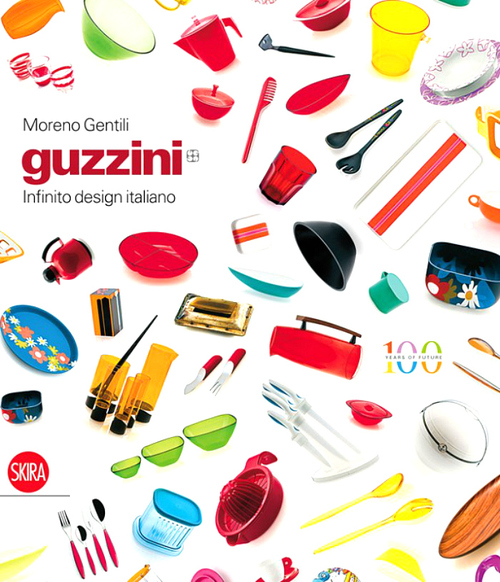
Il design Made in Italy di Guzzini trova spazio in un libro, ideato per celebrare i cento anni del noto marchio di complementi di arredo e di accessori italiano. Nel 2013, infatti, la ditta Fratelli Guzzini ha spento le sue prime 100 candeline, festeggiando l’evento ricordando una storia gloriosa fatta di tante piccole innovazioni, di rispetto della tradizione e di passione che ha coinvolto diverse generazioni.
1912, Enrico Guzzini progetta e realizza la prima tabacchiera in corno di bue. 2012, un libro (e un francobollo) celebrano i 100 anni dell’azienda.
Guzzini ha realizzato oggetti di design che sono diventati un cult: in 100 anni di storia è diventato uno dei brand più amati e utilizzati non solo in Italia, ma anche oltre i confini del nostro paese. Tutto merito di uno sguardo sempre attento all’innovazione, alla cura dei materiali, all’originalità, ma senza mai lasciare la strada tracciata dai fondatori, in quel rispetto della tradizione e in quella coesione famigliare, ingredienti di una ricetta di successo tutta Made in Italy.
Un secolo di design passato dal corno al plexiglas, dalle tabacchiere al set da whisky. Un’evoluzione fatta di ricerca, innovazione e spirito visionario che ha portato la Guzzini di Recanati da fabbrica di posate e articoli sanitari a colosso italiano nella produzioni di articoli per la casa, la cucina e la tavola. Riuscendo a rendere bello anche uno scolapasta.
Una storia infinita come infinito è il design italiano firmato Guzzini: progettato per essere usato e celebrato, ora, da un libro.
De Italianen hebben vorig jaar voor meer dan 56 miljard euro fiscale fraude gepleegd. Zo luidt het vandaag in een persbericht van de Italiaanse financiële politie (GDF). In de kader van het onderzoek naar belastingontduiking, werden bovendien ongeveer 12.000 personen aangegeven bij het gerecht.
De speurders van de financiële politie ontdekten vorig jaar 8.617 fraudeurs die volledig onbekend waren bij de belastingsdienst. Ze hadden namelijk nog nooit een inkomen aangegeven bij de fiscus. In totaal verduisterden de “onbekende fraudeurs” 22,7 miljard euro.
Daarnaast ontdekte de politie voor 17,1 miljard euro internationale belastingfraude, het resultaat van investeringen in fictieve vennootschappen in belastingparadijzen. De overige 16,3 miljard euro werden “op een andere manier” verduisterd, aldus GDF. De financiële politie heeft bovendien 11.769 vermoedelijke daders aangegeven bij het gerecht.
Strijd opgevoerd
De strijd tegen de fiscale fraude is in een stroomversnelling gekomen sinds de herfst van 2011, toen premier Mario Monti aan de macht kwam. “We gaan onze inspanningen voortzetten om het geld terug te vinden dat toebehoort aan de staat”, luidt het bij de politie.
Naast de belastingfraude ontdekten de speurders ook ongeveer 30.000 illegale werknemers, waaronder 16.233 zwartwerkers. Ten slotte namen ze voor meer dan een miljard euro goederen in beslag van de fraudeurs.
Er woonden eens drie broers in een klein stadje op het Italiaanse eiland Sicilië.
Hun vader, goudsmid en horlogemaker, speelde bij wijze van hobby accordeon op feestjes.
Twee zoons trokken naar Zwitserland.
Een van hen kwam ene leuke vrouw tegen.
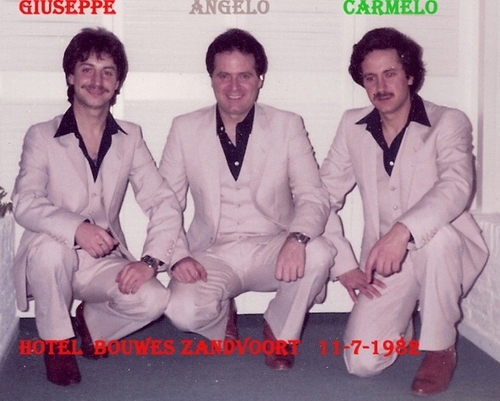
En zo is het, om een lang verhaal kort te maken, gekomen dat je de gebroeders Indaco nu tegen kunt komen, bijvoorbeeld zingend langs de tafels in restaurants of tijdens feesten en evenementen.
Even voorstellen, een bijzonder trio: Giuseppe, Carmelo en Angelo.
Ze staan al meer dan dertig jaar garant voor recht uit het hart gezongen emotie en Italiaanse volkscultuur.
Het Italiaanse lied is populair in Nederland.
Zij zijn de troubadours die echte Italiaanse volksmuziek brengen, uit Zuid-Italië met de emotionele invloeden van de Napolitaanse muziek.
Zij spelen elektronisch versterkt, maar ook akoestisch wandelend langs de tafels of tussen de gasten.
Zij brengen de muziek echt dicht bij de mensen.
Het repertoire van de gebroeders Indaco omvat onder andere Napolitaanse klassiekers als: O Sole Mio, Torna A Surriento en Funiculi Funicula, evenals hits van Andrea Bocelli en Luciano Pavarotti.
Ook hebben zij een breed scala aan modern repertoire zoals Eros Ramazotti, Zucchero en Cocciante.
En niet te vergeten klassieke songs zoals Volare, Marina, Ciao Ciao Bambino, Buona Sera Signorita en Come Prima.
Als aanvulling spelen de broers desgewenst ook bekende Spaanstalige en Zuid-Amerikaanse hits.
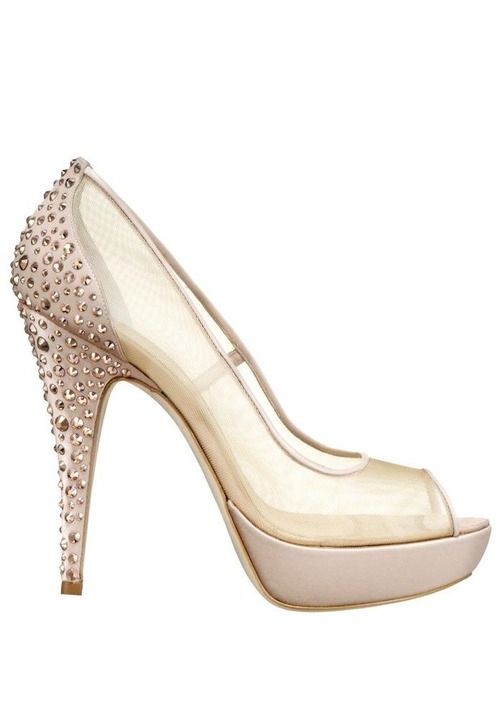
Pink satin fabric open-toe with net and swarovsky crystals covered heel